
Introduction
When I started using LinkedIn seriously, I had no strategy, no audience, and honestly, no clarity on what to post. Like most students, I thought LinkedIn was just a place to upload certificates, add connections, and occasionally like posts. But over time, I realized something important—LinkedIn is not just a platform, it’s an opportunity.
An opportunity to build your voice, your identity, and your personal brand.
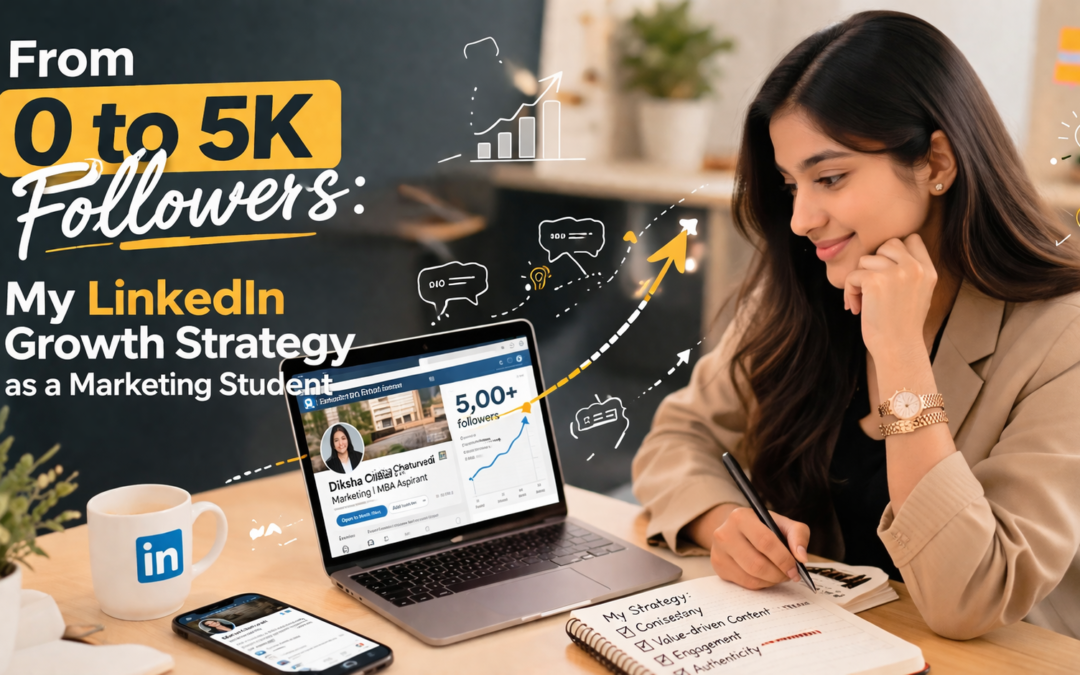
Today, with over 5,000 followers, my journey has been less about numbers and more about learning what actually works in digital marketing, content creation, and audience building. This growth didn’t happen overnight. It came from consistency, experimentation, and a deep understanding of what people truly connect with.
In this blog, I’ll walk you through my journey, the strategies I used, the mistakes I made, and the lessons that helped me grow from zero to 5K followers as a marketing student.
Understanding Why LinkedIn Matters
Before talking about growth, it’s important to understand why LinkedIn is such a powerful platform—especially for students.
Unlike other social media platforms, LinkedIn is intent-driven. People are here to learn, grow, network, and explore opportunities. This means your content doesn’t need to be entertaining in a traditional sense—it needs to be valuable.
As a marketing student, I realized LinkedIn could help me:
- Showcase my knowledge and skills
- Build credibility without years of experience
- Connect with industry professionals
- Create opportunities instead of waiting for them
Once I understood this, my mindset shifted from “using LinkedIn” to “building on LinkedIn.”
Phase 1: Starting with Clarity
One of the biggest mistakes beginners make is posting without direction. I did the same initially—random posts, inconsistent topics, and no clear audience.
Growth started when I asked myself three simple questions:
- What do I want to be known for?
- Who am I creating content for?
- What value can I provide consistently?
As a marketing student, the answer became clear:
I wanted to create content around digital marketing, student growth, and personal branding.
This clarity helped me stay focused and build a recognizable identity.
Phase 2: Choosing the Right Content Pillars
Instead of posting randomly, I divided my content into 3–4 core pillars:
- Marketing Insights
Sharing lessons, trends, and strategies I was learning - Personal Experiences
My journey, internships, challenges, and growth - Educational Content
Tips on social media, content creation, and branding - Relatable Student Content
Struggles, career confusion, and real-life thoughts
This structure made content creation easier and more consistent. It also helped my audience understand what to expect from me.
Phase 3: Consistency Over Perfection
One of the most important lessons in my journey was this:
Consistency matters more than perfection.
In the beginning, I used to overthink everything—wording, format, engagement, likes. This slowed me down and created unnecessary pressure.
Then I shifted my approach:
- Focus on posting regularly
- Improve gradually with each post
- Stop chasing perfection
I committed to posting consistently, even when engagement was low. Some posts got 10 likes, some got 50, and occasionally one would perform really well.
But every post helped me learn something.
Phase 4: Writing for People, Not Algorithms
A major turning point in my growth was when I stopped trying to “hack the algorithm” and started focusing on people.
Instead of writing posts that sounded formal or robotic, I began writing:
- Simple
- Clear
- Conversational
I treated every post like I was talking to a real person.
This made my content more relatable and engaging. People started connecting, commenting, and sharing their thoughts.
Because at the end of the day, people don’t engage with content—they engage with emotions, experiences, and authenticity.
Phase 5: Hook Matters More Than You Think
One thing I learned quickly—if your first line is weak, your post won’t be read.
The hook is what decides whether someone stops scrolling or keeps going.
So I started focusing on strong opening lines:
- Asking a question
- Sharing a bold statement
- Starting with a personal experience
- Highlighting a problem
For example:
Instead of saying, “Here are some tips for LinkedIn growth,”
I would write something like:
“I had 0 followers and no idea what to post—this is what changed everything.”
This small change significantly improved my reach and engagement.
Phase 6: Learning from Every Post
Not every post performs well—and that’s okay.
Instead of getting discouraged, I started analyzing:
- Which posts got more engagement?
- What type of content people saved or shared?
- What topics generated conversations?
Patterns started to emerge:
- Personal stories performed better
- Simple language worked best
- Practical insights got more saves
This helped me refine my content strategy over time.
Phase 7: Engaging with the Community
Growth on LinkedIn is not just about posting—it’s also about engaging.
I made it a habit to:
- Reply to every comment on my posts
- Comment on other creators’ posts
- Connect with people genuinely
- Start conversations in DMs
This helped me build relationships, not just followers.
People started recognizing my name, engaging more frequently, and supporting my content.
Phase 8: Building Authenticity
One of the biggest advantages you have as a student is authenticity.
You don’t need to pretend to be an expert. You just need to be real.
I shared:
- What I was learning
- What I struggled with
- What worked and what didn’t
This made my content more relatable.
People don’t expect students to know everything—they expect honesty and effort.
And that’s what builds trust.
Phase 9: Turning Learning into Content
As a marketing student, I realized something powerful:
Everything you learn can become content.
- Attended a lecture? Share key insights
- Worked on a project? Share your experience
- Did an internship? Share lessons
- Read an article? Share your perspective
This made content creation easier because I was not “creating” from scratch—I was simply documenting my journey.
Phase 10: Patience and Long-Term Thinking
Growth doesn’t happen overnight.
There were weeks where nothing worked. Posts didn’t perform, engagement dropped, and motivation was low.
But I stayed consistent.
Because LinkedIn growth is not about one viral post—it’s about building trust over time.
And slowly, things started changing:
- More profile views
- More connection requests
- More engagement
- More opportunities
Challenges I Faced
This journey was not easy. Some challenges I faced:
- Self-doubt: Wondering if my content was good enough
- Low engagement initially: Posting without response
- Comparison: Seeing others grow faster
- Consistency struggles: Managing time with studies
But every challenge taught me something:
Growth comes from showing up, even when it’s uncomfortable.
Key Lessons from My Journey
Here are some of the biggest lessons I learned:
- You don’t need to be an expert to start
- Clarity is more important than creativity
- Consistency beats talent
- Authenticity builds stronger connections than perfection
- Engagement is as important as content
- Learning and sharing go hand in hand
What 5K Followers Really Means
For many, 5K followers might seem like just a number.
But for me, it represents:
- 5,000 people who chose to connect
- 5,000 opportunities to create impact
- 5,000 reasons to keep showing up
It’s not just about followers—it’s about the journey, the learning, and the community built along the way.
Advice for Students Starting on LinkedIn
If you’re just starting your LinkedIn journey, here’s what I would suggest:
- Start before you feel ready
- Focus on one niche
- Share what you learn
- Be consistent
- Don’t fear low engagement
- Engage with others genuinely
- Be patient with your growth
You don’t need perfect content—you need honest content.
Conclusion
Growing from 0 to 5K followers on LinkedIn has been one of the most valuable experiences in my journey as a marketing student.
It taught me more than just content creation—it taught me discipline, communication, strategy, and the importance of building a personal brand.
And the best part? This is just the beginning.
LinkedIn is not just a platform where I post—it’s a space where I learn, connect, and grow every single day.
If you’re thinking about starting your journey, don’t wait.
Start today. Stay consistent. Keep learning.
Because one day, you’ll look back and realize—your growth started with just one post.