Select Page
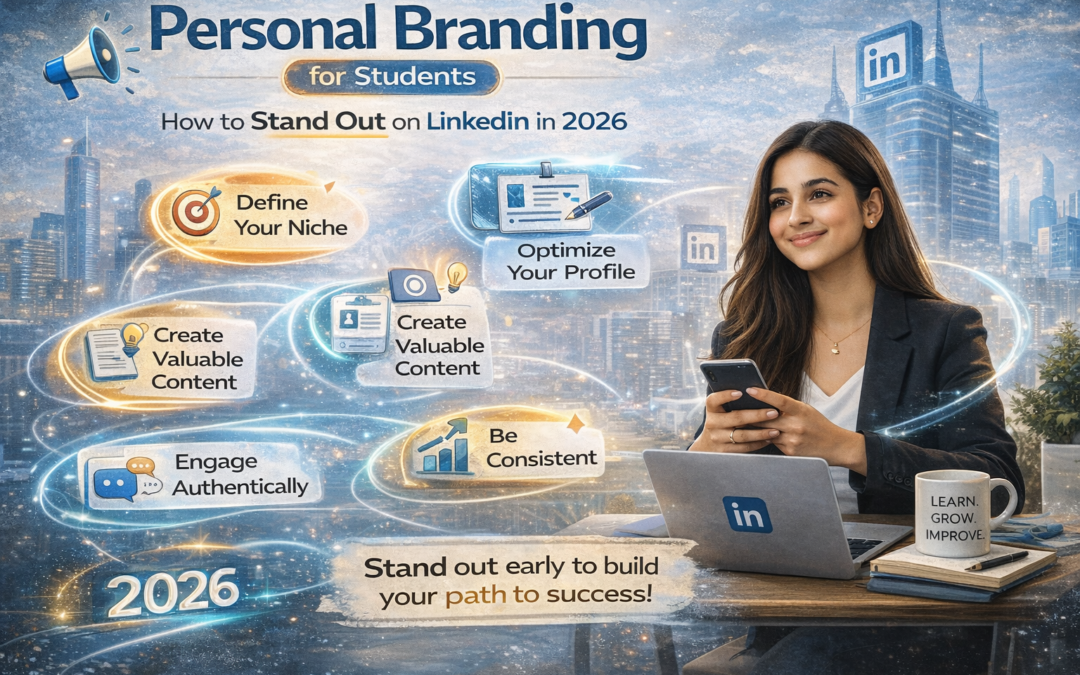
Personal Branding for Students: How to Stand Out on LinkedIn in 2026

Personal Branding for Students: How to Stand Out on LinkedIn in 2026

Introduction

In today’s competitive world, having a degree is no longer enough. Thousands of students graduate every year with similar qualifications, similar skills, and similar resumes. So the real question becomes—what makes you different?

The answer lies in personal branding.

Personal branding is how you present yourself online, how people perceive you, and what they remember you for. And in 2026, platforms like LinkedIn are no longer just for job searching—they are platforms for building visibility, credibility, and opportunities.

As a student, you don’t need years of experience to stand out. You just need clarity, consistency, and the willingness to share your journey.

In this blog, let’s explore how you can build a strong personal brand on LinkedIn and stand out as a student in 2026.

What is Personal Branding?

Personal branding is the process of creating a unique identity for yourself in the digital space.

It’s not about pretending to be someone else—it’s about showcasing:

  • Who you are
  • What you know
  • What you are learning
  • What you stand for

Your personal brand is what people think of when they see your name on LinkedIn.

Why Personal Branding Matters for Students

Many students believe personal branding is only for professionals. But in reality, it’s even more powerful when you start early.

Personal branding helps you:

  • Build visibility before entering the job market
  • Showcase your skills beyond your resume
  • Connect with industry professionals
  • Create opportunities instead of waiting for them
  • Stand out in a crowded space

In simple terms, your personal brand becomes your competitive advantage.

Step 1: Define Your Niche

The first step to building a strong personal brand is clarity.

Ask yourself:

  • What do I want to be known for?
  • What field am I interested in?
  • What topics can I consistently talk about?

As a student, your niche could be:

  • Digital marketing
  • Finance
  • HR
  • Entrepreneurship
  • Career growth

You don’t need to know everything—you just need to start somewhere.

Step 2: Optimize Your LinkedIn Profile

Your LinkedIn profile is your digital identity.

Make sure it clearly reflects:

  • Your headline (what you do + what you’re aiming for)
  • A professional profile picture
  • A compelling “About” section
  • Your skills and experiences

Think of your profile as your personal landing page. When someone visits it, they should immediately understand who you are and what you bring to the table.

Step 3: Start Creating Content

Content is the most powerful way to build your personal brand.

You don’t need to be an expert to start. You can create content based on:

  • What you are learning
  • Your experiences
  • Your opinions
  • Your mistakes and lessons

Some content ideas:

  • “What I learned from my internship”
  • “3 marketing lessons every student should know”
  • “Mistakes I made as a beginner”

Consistency is key. Start small, but stay regular.

Step 4: Focus on Value, Not Perfection

Many students hesitate to post because they think their content isn’t “perfect.”

But perfection is not what builds a personal brand—value does.

Your content should:

  • Solve a problem
  • Share a lesson
  • Provide an insight
  • Start a conversation

Even simple posts can create impact if they are meaningful.

Step 5: Be Consistent

Consistency builds visibility.

Posting once in a while won’t help you grow. You need to show up regularly.

You can start with:

  • 2–3 posts per week
  • Consistent themes
  • Regular engagement

Over time, people will start recognizing your content and associating you with your niche.

Step 6: Engage with Others

LinkedIn is not just about posting—it’s about interacting.

Engagement helps you:

  • Increase visibility
  • Build relationships
  • Learn from others

You can:

  • Comment on posts
  • Share your thoughts
  • Reply to comments on your posts
  • Connect with people in your field

Meaningful engagement builds a strong network.

Step 7: Share Your Journey, Not Just Achievements

Many people only post when they achieve something.

But what truly connects with people is the journey.

Share:

  • Your struggles
  • Your learning process
  • Your experiences

This makes your content more relatable and authentic.

People connect with stories, not just achievements.

Step 8: Build Authenticity

Authenticity is your biggest strength.

You don’t need to copy others or follow trends blindly.

Be:

  • Honest
  • Real
  • Genuine

Your unique perspective is what makes your content different.

Step 9: Learn and Adapt

Digital platforms keep evolving, and so should you.

Observe:

  • What type of content performs well
  • What your audience engages with
  • What works for you

Keep experimenting and improving.

Personal branding is a continuous process.

Step 10: Be Patient

Building a personal brand takes time.

You may not see immediate results, and that’s okay.

Focus on:

  • Consistency
  • Learning
  • Improvement

Over time, your efforts will compound.

Common Mistakes to Avoid

While building your personal brand, avoid these mistakes:

  • Posting without clarity
  • Being inconsistent
  • Copying others’ content
  • Focusing only on self-promotion
  • Ignoring engagement

Avoiding these mistakes can save you a lot of time and effort.

Key Takeaways

If you want to stand out on LinkedIn in 2026, remember:

  • Clarity is the foundation of personal branding
  • Content builds visibility
  • Consistency drives growth
  • Engagement builds relationships
  • Authenticity creates trust

Conclusion

Personal branding is no longer optional—it’s essential.

As a student, you have the advantage of starting early. You don’t need years of experience to build a strong presence. You just need to start, stay consistent, and keep learning.

LinkedIn is not just a platform—it’s an opportunity to build your identity, share your voice, and create your own path.

So don’t wait.

Start building your personal brand today—because the sooner you start, the stronger your presence will be tomorrow.
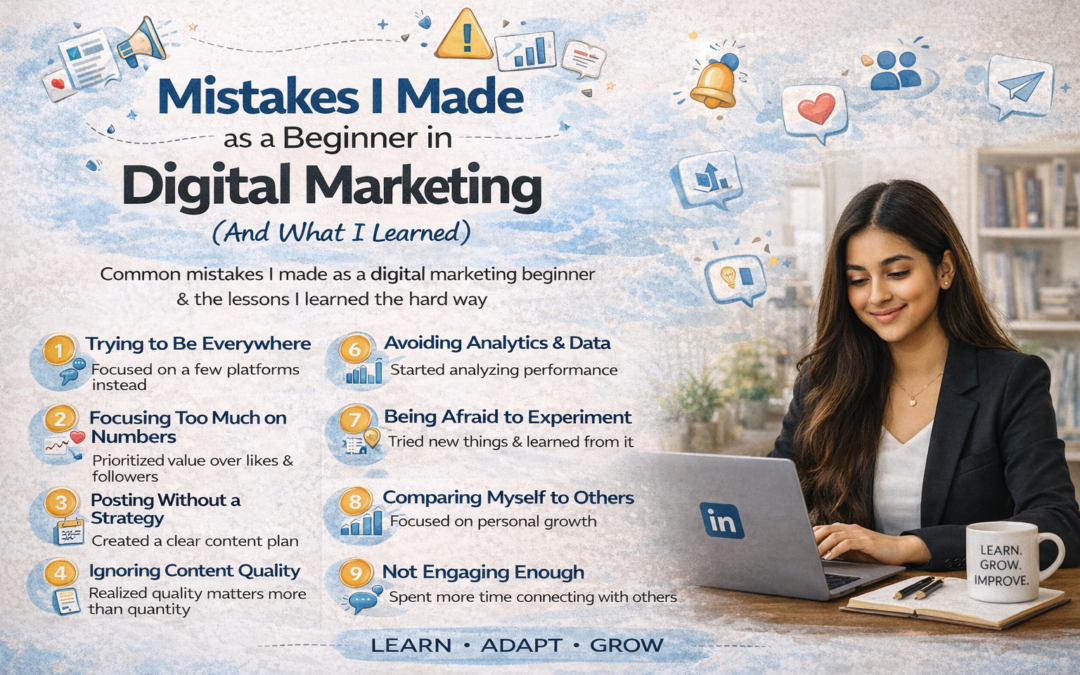
Mistakes I Made as a Beginner in Digital Marketing (And What I Learned)

Mistakes I Made as a Beginner in Digital Marketing (And What I Learned)

Introduction

When I first stepped into the world of digital marketing, I thought I had everything figured out. I knew the basics, understood platforms, and had a rough idea of how things worked. But very quickly, I realized that digital marketing is not something you master through theory alone—it’s something you learn by doing, failing, and improving.

Looking back, I made several mistakes. Some slowed my growth, some taught me hard lessons, and some completely changed the way I approach marketing today.

This blog is not just about what I did wrong—it’s about what those mistakes taught me and how they shaped my journey as a marketing student and aspiring professional.

1. Trying to Be Everywhere at Once

In the beginning, I tried to be active on every platform—LinkedIn, Instagram, Facebook, Telegram, Reddit—thinking more presence meant more growth.

But instead of growing, I felt overwhelmed.

I couldn’t maintain consistency, my content lacked focus, and I wasn’t able to build a strong identity anywhere.

What I Learned:
It’s better to focus on one or two platforms and build depth rather than spreading yourself too thin. Growth comes from consistency and clarity, not from being everywhere.

2. Focusing Too Much on Likes and Followers

Initially, I measured success through numbers—likes, followers, and views.

If a post didn’t perform well, I felt discouraged. If it did well, I felt validated.

This created a cycle where my motivation depended on external metrics.

What I Learned:
Numbers are important, but they are not everything. What truly matters is:

  • The value your content provides
  • The connections you build
  • The learning you gain

When I shifted my focus from numbers to value, my content improved—and so did my growth.

3. Posting Without a Clear Strategy

I used to post randomly—without thinking about the audience, purpose, or consistency.

Some posts were educational, some were personal, and some had no clear direction.

This confused my audience and made it difficult to build a strong presence.

What I Learned:
Having a clear content strategy is essential.

Once I defined my content pillars and understood my audience, my content became more focused and effective.

4. Ignoring the Importance of Content Quality

In the beginning, I believed posting more frequently was enough.

But I didn’t pay enough attention to:

  • Structure
  • Clarity
  • Readability

As a result, my content didn’t create much impact.

What I Learned:
Quality matters more than quantity.

A well-structured, clear, and engaging post performs far better than multiple average posts.

5. Not Understanding My Audience

One of my biggest mistakes was creating content based on what I wanted to say, rather than what my audience wanted to see.

This led to low engagement and limited reach.

What I Learned:
Marketing is not about you—it’s about your audience.

Understanding their:

  • Needs
  • Problems
  • Interests

helps in creating content that truly connects.

6. Avoiding Analytics and Data

At first, I ignored analytics completely.

I didn’t track what worked, what didn’t, or why certain posts performed better.

I was creating content blindly.

What I Learned:
Data is your best teacher.

Analyzing performance helps you:

  • Improve content
  • Understand audience behavior
  • Make better decisions

Even basic insights can make a big difference.

7. Being Afraid to Experiment

I used to play safe.

I avoided trying new formats, new ideas, or different styles because I was afraid of failure.

But this limited my growth.

What I Learned:
Experimentation is essential in digital marketing.

Some ideas won’t work—but the ones that do can create significant impact.

Growth happens when you step out of your comfort zone.

8. Comparing Myself to Others

Seeing others grow faster often made me question my own progress.

I compared:

  • Engagement
  • Followers
  • Content quality

This affected my confidence and consistency.

What I Learned:
Everyone’s journey is different.

Instead of comparing, I started focusing on:

  • My own progress
  • My own learning
  • My own consistency

This shift improved both my mindset and my results.

9. Not Engaging Enough with Others

Initially, I focused only on posting content.

I didn’t spend enough time:

  • Commenting on others’ posts
  • Replying thoughtfully
  • Building conversations

This limited my visibility and network.

What I Learned:
Engagement is as important as content.

Building relationships and interacting with others helps in:

  • Increasing visibility
  • Creating connections
  • Building a community

10. Expecting Quick Results

I expected fast growth.

When it didn’t happen, I felt frustrated.

But digital marketing doesn’t work that way.

What I Learned:
Growth takes time.

Consistency, patience, and continuous learning are key.

The results may not be immediate, but they are worth it in the long run.

Key Takeaways

If I had to summarize my journey, these would be my biggest lessons:

  • Focus on clarity, not chaos
  • Value matters more than metrics
  • Strategy is essential
  • Quality beats quantity
  • Audience comes first
  • Data drives improvement
  • Experimentation leads to growth
  • Comparison slows you down
  • Engagement builds connections
  • Patience is everything

Conclusion

Mistakes are not failures—they are learning opportunities.

Every mistake I made as a beginner in digital marketing helped me grow, improve, and understand the field better.

Today, I approach marketing with more clarity, confidence, and strategy—but I’m still learning every day.

If you’re just starting your journey, don’t be afraid to make mistakes.

Because those mistakes will teach you lessons that no course or book ever can.

Start, learn, improve—and keep going.

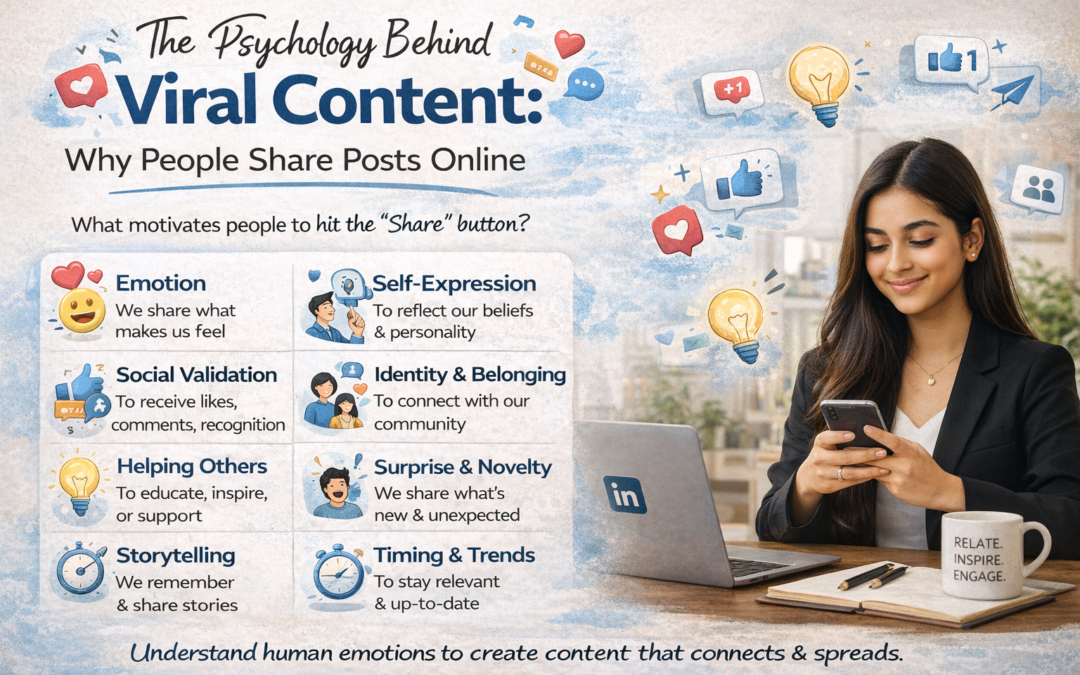
The Psychology Behind Viral Content: Why People Share Posts Online

The Psychology Behind Viral Content: Why People Share Posts Online

Introduction

Have you ever wondered why some posts suddenly appear everywhere? One moment you’re scrolling casually, and the next, the same post is being shared, reposted, and talked about by thousands of people.

It’s easy to assume that viral content is just luck. But in reality, there is a deeper reason behind why people share content online. It’s not random—it’s psychological.

Every share, like, and comment is driven by human emotions, behaviors, and social instincts. Understanding this psychology is what separates average content from content that spreads rapidly.

In this blog, we’ll break down the key psychological triggers behind viral content and understand why people feel compelled to hit the “share” button.

1. People Share Content That Makes Them Feel Something

At the core of every viral post is emotion.

People don’t share content because it’s “informative”—they share it because it makes them feel something. That feeling could be:

  • Happiness
  • Inspiration
  • Surprise
  • Anger
  • Relatability

Emotional content creates a stronger connection. It stays in the mind longer and pushes people to take action.

For example, a motivational story about someone overcoming challenges is more likely to be shared than a simple informational post. Why? Because it creates an emotional impact.

The stronger the emotion, the higher the chances of sharing.

2. Sharing is a Form of Self-Expression

When people share content, they are not just sharing information—they are expressing themselves.

Every share reflects something about the person:

  • Their beliefs
  • Their personality
  • Their interests
  • Their values

For instance:

  • Sharing a career-related post shows ambition
  • Sharing a funny post shows a sense of humor
  • Sharing an insightful post shows knowledge

This is why people are selective about what they share. They want their online presence to represent who they are.

As a content creator, if your content helps people express themselves, it becomes more shareable.

3. Social Validation Plays a Big Role

Humans naturally seek validation.

When someone shares a post, they are also looking for:

  • Likes
  • Comments
  • Recognition

This creates a cycle:

  • People share content
  • They receive engagement
  • This reinforces the behavior

Content that is already gaining traction is more likely to be shared because people feel it is “safe” and socially accepted.

This is often referred to as the bandwagon effect—people follow what others are already engaging with.

4. Relatability Increases Shareability

One of the most powerful drivers of viral content is relatability.

When people see content and think:
“This is exactly me” or “I’ve experienced this,”
they are more likely to share it.

Relatable content works because it:

  • Feels personal
  • Builds connection
  • Creates a sense of belonging

For students and professionals, posts about career struggles, productivity issues, or daily challenges often go viral because many people relate to them.

5. People Share to Help Others

Not all sharing is self-driven—sometimes it’s about helping others.

People often share content that they believe will:

  • Educate someone
  • Solve a problem
  • Add value

For example:

  • Study tips
  • Career advice
  • Marketing insights

This type of content spreads because it is useful.

When your content answers a question or solves a problem, people feel motivated to pass it on.

6. Simplicity Makes Content More Shareable

Complex content rarely goes viral.

People prefer content that is:

  • Easy to understand
  • Quick to consume
  • Clear in message

In today’s fast-paced digital environment, attention spans are short. If someone has to think too much to understand your content, they are less likely to engage with it.

Simple, clear, and structured content performs better because it is accessible to a wider audience.

7. Surprise and Novelty Capture Attention

People are naturally drawn to things that are new or unexpected.

Content that:

  • Breaks common beliefs
  • Presents surprising facts
  • Offers a unique perspective

is more likely to grab attention and be shared.

For example, a post that challenges a popular opinion or presents a fresh insight often sparks curiosity and conversation.

This element of surprise makes people want to share it with others.

8. Storytelling Creates Stronger Connections

Stories are one of the oldest forms of communication—and they are still the most powerful.

A well-told story:

  • Engages emotions
  • Keeps people interested
  • Makes content memorable

Instead of just sharing facts, storytelling adds context and meaning.

For example, sharing a personal journey or a real-life experience makes content more relatable and impactful.

People remember stories—and they share them too.

9. Identity and Belonging Drive Sharing Behavior

Humans have a strong desire to belong.

People share content that aligns with:

  • Their community
  • Their profession
  • Their interests

For example:

  • Marketing students share marketing-related posts
  • Fitness enthusiasts share health-related content

Sharing becomes a way to connect with like-minded people.

When your content speaks directly to a specific audience, it creates a sense of identity and belonging, increasing its chances of being shared.

10. Timing and Context Matter

Even great content needs the right timing.

A post related to:

  • Current trends
  • Ongoing discussions
  • Relevant events

is more likely to gain traction.

Content that feels timely and relevant naturally gets more attention and shares.

Understanding when your audience is most active and what they are currently interested in can make a big difference.

Common Mistakes That Reduce Shareability

While focusing on what works, it’s also important to understand what doesn’t.

Some common mistakes include:

  • Overly promotional content
  • Lack of clarity
  • Ignoring audience needs
  • Trying too hard to go viral
  • Inconsistent messaging

Viral content is not about forcing attention—it’s about creating value that people naturally want to share.

Key Takeaways

If we simplify everything, viral content is built on a few core principles:

  • Emotion drives action
  • People share to express themselves
  • Relatability builds connection
  • Simplicity improves reach
  • Value encourages sharing

Understanding these principles helps you create content that not only gets attention but also gets shared.

Conclusion

Viral content is not magic—it’s psychology in action.

Behind every share is a human reason, whether it’s emotion, identity, value, or connection.

As a marketing student or content creator, the goal should not be to chase virality blindly. Instead, focus on understanding your audience and creating content that resonates with them.

Because when content connects on a human level, sharing becomes natural.

And that’s what truly makes content go viral.

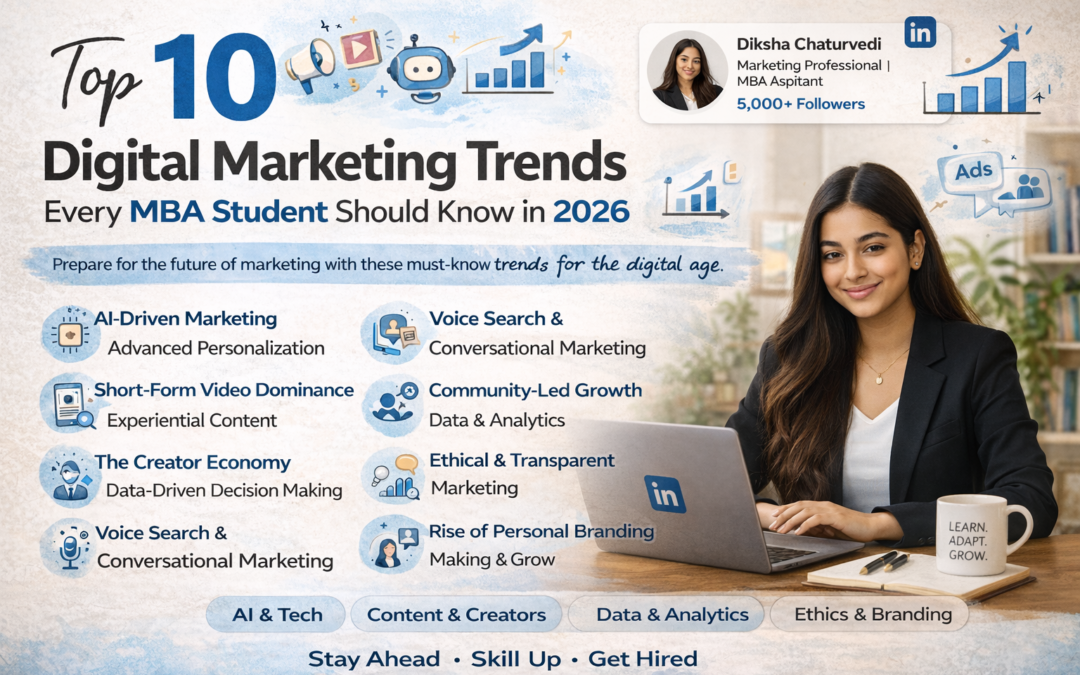
Top 10 Digital Marketing Trends Every MBA Student Should Know in 2026

Top 10 Digital Marketing Trends Every MBA Student Should Know in 2026

Introduction

Digital marketing is evolving faster than ever. What worked a year ago may already feel outdated today. New technologies, changing consumer behavior, and platform innovations are constantly reshaping how brands communicate, engage, and grow.

For MBA students, especially those specializing in marketing, staying updated is not optional—it’s essential. The gap between theoretical knowledge and industry expectations is shrinking, and recruiters are increasingly looking for candidates who understand what’s happening now, not just what’s written in textbooks.

In 2026, digital marketing is no longer just about running ads or posting on social media. It’s about building experiences, using data intelligently, and creating meaningful connections with audiences.

In this blog, let’s explore the top 10 digital marketing trends every MBA student should understand to stay relevant and future-ready.

1. AI-Driven Marketing is Becoming the Norm

Artificial Intelligence is no longer a “future concept”—it is now a core part of marketing strategies.

From content creation and chatbots to predictive analytics and personalized recommendations, AI is helping brands make faster and smarter decisions.

Marketers are now able to:

  • Analyze large amounts of data quickly
  • Understand customer behavior patterns
  • Automate repetitive tasks
  • Deliver highly personalized experiences

For MBA students, this means understanding how AI tools work and how they can be integrated into marketing strategies is becoming a must-have skill.

2. Personalization is No Longer Optional

Consumers today expect brands to understand them. Generic messaging is losing its impact.

In 2026, personalization goes beyond using a customer’s name in emails. It includes:

  • Personalized product recommendations
  • Customized content feeds
  • Tailored email campaigns
  • Behavior-based targeting

Brands that fail to personalize risk losing attention in a crowded digital space.

As a marketing student, learning how to segment audiences and create personalized journeys will give you a strong advantage.

3. Short-Form Video Continues to Dominate

Attention spans are shrinking, and short-form video content is leading the way.

Platforms are prioritizing:

  • Quick, engaging videos
  • Story-driven content
  • Informational yet entertaining formats

Short-form videos are not just for entertainment—they are now used for:

  • Product education
  • Brand storytelling
  • Career advice
  • Thought leadership

Understanding how to communicate value in under 60 seconds is becoming a critical marketing skill.

4. Content is Shifting from Informational to Experiential

Content is no longer just about sharing information—it’s about creating an experience.

In 2026, successful content:

  • Engages emotionally
  • Encourages interaction
  • Builds a connection with the audience

This includes formats like:

  • Storytelling posts
  • Interactive content
  • Real-life experiences
  • Behind-the-scenes content

For MBA students, this means focusing not just on what you say, but how you make people feel.

5. Creator Economy is Redefining Brand Marketing

The rise of individual creators has changed how brands approach marketing.

Instead of relying only on traditional advertising, brands are collaborating with:

  • Micro-influencers
  • Niche content creators
  • Industry experts

These creators bring authenticity and trust, which traditional ads often lack.

As a marketing student, understanding how to work with creators, build collaborations, and measure impact is becoming increasingly important.

6. Data-Driven Decision Making is a Core Skill

Marketing is becoming more analytical than ever.

Every campaign, post, and strategy is now backed by data. Metrics are not just numbers—they are insights.

Marketers are expected to:

  • Track performance
  • Analyze user behavior
  • Optimize campaigns based on results

This shift means MBA students must become comfortable with data, dashboards, and performance analysis.

The ability to combine creativity with data will define successful marketers.

7. Voice Search and Conversational Marketing are Growing

With the increasing use of voice assistants and conversational interfaces, the way people search is changing.

People are now searching in a more natural, conversational tone.

This trend is influencing:

  • Content creation
  • Search strategies
  • Customer interactions

Brands are also using chat-based marketing to engage users in real time.

For students, this means understanding how communication is evolving and adapting content accordingly.

8. Community-Led Growth is Gaining Importance

Brands are shifting focus from just acquiring customers to building communities.

Communities create:

  • Loyal customers
  • Strong brand advocates
  • Higher engagement

Platforms like LinkedIn, Discord, and niche forums are becoming important spaces for community building.

For MBA students, learning how to build, manage, and engage communities is a valuable skill that goes beyond traditional marketing.

9. Ethical and Transparent Marketing is the Future

Consumers today are more aware and conscious than ever.

They care about:

  • Brand values
  • Transparency
  • Authenticity
  • Social responsibility

Marketing is no longer just about selling—it’s about building trust.

Brands that communicate honestly and align with their values are more likely to succeed in the long run.

As a future marketer, maintaining ethical standards and transparent communication will be essential.

10. Personal Branding is Becoming a Career Asset

One of the biggest shifts in digital marketing is the rise of personal branding.

Professionals are no longer just employees—they are brands.

Platforms like LinkedIn have made it easier to:

  • Share knowledge
  • Build credibility
  • Network with industry professionals
  • Create opportunities

For MBA students, building a personal brand can:

  • Increase visibility
  • Open career opportunities
  • Establish authority early

Your online presence is becoming as important as your resume.

Conclusion

Digital marketing in 2026 is dynamic, data-driven, and deeply human at the same time. It requires a balance of creativity, analytical thinking, and adaptability.

For MBA students, the goal should not just be to learn these trends, but to apply them. Whether it’s creating content, analyzing data, or building a personal brand, practical experience will set you apart.

The marketing world is evolving—and so should you.

Stay curious. Stay consistent. Keep experimenting.

Because in a field like digital marketing, the ones who learn continuously are the ones who grow the fastest.

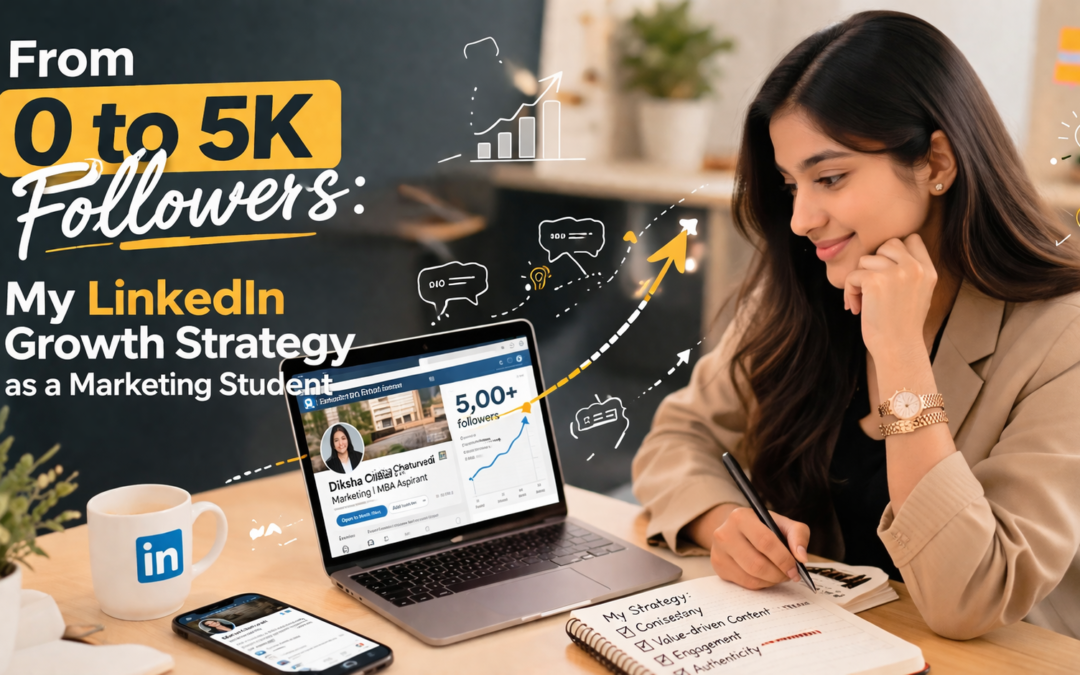
From 0 to 5K Followers: My LinkedIn Growth Strategy as a Marketing Student

From 0 to 5K Followers: My LinkedIn Growth Strategy as a Marketing Student

Introduction

When I started using LinkedIn seriously, I had no strategy, no audience, and honestly, no clarity on what to post. Like most students, I thought LinkedIn was just a place to upload certificates, add connections, and occasionally like posts. But over time, I realized something important—LinkedIn is not just a platform, it’s an opportunity.

An opportunity to build your voice, your identity, and your personal brand.

Today, with over 5,000 followers, my journey has been less about numbers and more about learning what actually works in digital marketing, content creation, and audience building. This growth didn’t happen overnight. It came from consistency, experimentation, and a deep understanding of what people truly connect with.

In this blog, I’ll walk you through my journey, the strategies I used, the mistakes I made, and the lessons that helped me grow from zero to 5K followers as a marketing student.

Understanding Why LinkedIn Matters

Before talking about growth, it’s important to understand why LinkedIn is such a powerful platform—especially for students.

Unlike other social media platforms, LinkedIn is intent-driven. People are here to learn, grow, network, and explore opportunities. This means your content doesn’t need to be entertaining in a traditional sense—it needs to be valuable.

As a marketing student, I realized LinkedIn could help me:

  • Showcase my knowledge and skills
  • Build credibility without years of experience
  • Connect with industry professionals
  • Create opportunities instead of waiting for them

Once I understood this, my mindset shifted from “using LinkedIn” to “building on LinkedIn.”

Phase 1: Starting with Clarity

One of the biggest mistakes beginners make is posting without direction. I did the same initially—random posts, inconsistent topics, and no clear audience.

Growth started when I asked myself three simple questions:

  • What do I want to be known for?
  • Who am I creating content for?
  • What value can I provide consistently?

As a marketing student, the answer became clear:
I wanted to create content around digital marketing, student growth, and personal branding.

This clarity helped me stay focused and build a recognizable identity.

Phase 2: Choosing the Right Content Pillars

Instead of posting randomly, I divided my content into 3–4 core pillars:

  1. Marketing Insights
    Sharing lessons, trends, and strategies I was learning
  2. Personal Experiences
    My journey, internships, challenges, and growth
  3. Educational Content
    Tips on social media, content creation, and branding
  4. Relatable Student Content
    Struggles, career confusion, and real-life thoughts

This structure made content creation easier and more consistent. It also helped my audience understand what to expect from me.

Phase 3: Consistency Over Perfection

One of the most important lessons in my journey was this:
Consistency matters more than perfection.

In the beginning, I used to overthink everything—wording, format, engagement, likes. This slowed me down and created unnecessary pressure.

Then I shifted my approach:

  • Focus on posting regularly
  • Improve gradually with each post
  • Stop chasing perfection

I committed to posting consistently, even when engagement was low. Some posts got 10 likes, some got 50, and occasionally one would perform really well.

But every post helped me learn something.

Phase 4: Writing for People, Not Algorithms

A major turning point in my growth was when I stopped trying to “hack the algorithm” and started focusing on people.

Instead of writing posts that sounded formal or robotic, I began writing:

  • Simple
  • Clear
  • Conversational

I treated every post like I was talking to a real person.

This made my content more relatable and engaging. People started connecting, commenting, and sharing their thoughts.

Because at the end of the day, people don’t engage with content—they engage with emotions, experiences, and authenticity.

Phase 5: Hook Matters More Than You Think

One thing I learned quickly—if your first line is weak, your post won’t be read.

The hook is what decides whether someone stops scrolling or keeps going.

So I started focusing on strong opening lines:

  • Asking a question
  • Sharing a bold statement
  • Starting with a personal experience
  • Highlighting a problem

For example:
Instead of saying, “Here are some tips for LinkedIn growth,”
I would write something like:
“I had 0 followers and no idea what to post—this is what changed everything.”

This small change significantly improved my reach and engagement.

Phase 6: Learning from Every Post

Not every post performs well—and that’s okay.

Instead of getting discouraged, I started analyzing:

  • Which posts got more engagement?
  • What type of content people saved or shared?
  • What topics generated conversations?

Patterns started to emerge:

  • Personal stories performed better
  • Simple language worked best
  • Practical insights got more saves

This helped me refine my content strategy over time.

Phase 7: Engaging with the Community

Growth on LinkedIn is not just about posting—it’s also about engaging.

I made it a habit to:

  • Reply to every comment on my posts
  • Comment on other creators’ posts
  • Connect with people genuinely
  • Start conversations in DMs

This helped me build relationships, not just followers.

People started recognizing my name, engaging more frequently, and supporting my content.

Phase 8: Building Authenticity

One of the biggest advantages you have as a student is authenticity.

You don’t need to pretend to be an expert. You just need to be real.

I shared:

  • What I was learning
  • What I struggled with
  • What worked and what didn’t

This made my content more relatable.

People don’t expect students to know everything—they expect honesty and effort.

And that’s what builds trust.

Phase 9: Turning Learning into Content

As a marketing student, I realized something powerful:
Everything you learn can become content.

  • Attended a lecture? Share key insights
  • Worked on a project? Share your experience
  • Did an internship? Share lessons
  • Read an article? Share your perspective

This made content creation easier because I was not “creating” from scratch—I was simply documenting my journey.

Phase 10: Patience and Long-Term Thinking

Growth doesn’t happen overnight.

There were weeks where nothing worked. Posts didn’t perform, engagement dropped, and motivation was low.

But I stayed consistent.

Because LinkedIn growth is not about one viral post—it’s about building trust over time.

And slowly, things started changing:

  • More profile views
  • More connection requests
  • More engagement
  • More opportunities

Challenges I Faced

This journey was not easy. Some challenges I faced:

  • Self-doubt: Wondering if my content was good enough
  • Low engagement initially: Posting without response
  • Comparison: Seeing others grow faster
  • Consistency struggles: Managing time with studies

But every challenge taught me something:
Growth comes from showing up, even when it’s uncomfortable.

Key Lessons from My Journey

Here are some of the biggest lessons I learned:

  • You don’t need to be an expert to start
  • Clarity is more important than creativity
  • Consistency beats talent
  • Authenticity builds stronger connections than perfection
  • Engagement is as important as content
  • Learning and sharing go hand in hand

What 5K Followers Really Means

For many, 5K followers might seem like just a number.

But for me, it represents:

  • 5,000 people who chose to connect
  • 5,000 opportunities to create impact
  • 5,000 reasons to keep showing up

It’s not just about followers—it’s about the journey, the learning, and the community built along the way.

Advice for Students Starting on LinkedIn

If you’re just starting your LinkedIn journey, here’s what I would suggest:

  • Start before you feel ready
  • Focus on one niche
  • Share what you learn
  • Be consistent
  • Don’t fear low engagement
  • Engage with others genuinely
  • Be patient with your growth

You don’t need perfect content—you need honest content.

Conclusion

Growing from 0 to 5K followers on LinkedIn has been one of the most valuable experiences in my journey as a marketing student.

It taught me more than just content creation—it taught me discipline, communication, strategy, and the importance of building a personal brand.

And the best part? This is just the beginning.

LinkedIn is not just a platform where I post—it’s a space where I learn, connect, and grow every single day.

If you’re thinking about starting your journey, don’t wait.

Start today. Stay consistent. Keep learning.

Because one day, you’ll look back and realize—your growth started with just one post.