
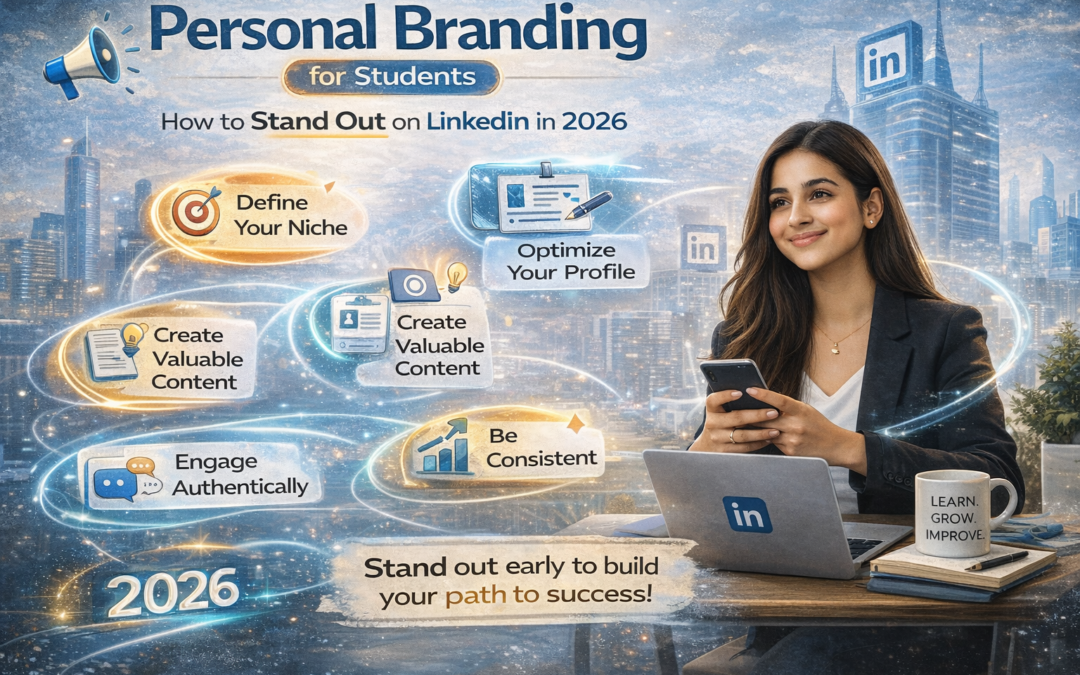
Introduction
In today’s competitive world, having a degree is no longer enough. Thousands of students graduate every year with similar qualifications, similar skills, and similar resumes. So the real question becomes—what makes you different?
The answer lies in personal branding.
Personal branding is how you present yourself online, how people perceive you, and what they remember you for. And in 2026, platforms like LinkedIn are no longer just for job searching—they are platforms for building visibility, credibility, and opportunities.
As a student, you don’t need years of experience to stand out. You just need clarity, consistency, and the willingness to share your journey.
In this blog, let’s explore how you can build a strong personal brand on LinkedIn and stand out as a student in 2026.
What is Personal Branding?
Personal branding is the process of creating a unique identity for yourself in the digital space.
It’s not about pretending to be someone else—it’s about showcasing:
- Who you are
- What you know
- What you are learning
- What you stand for
Your personal brand is what people think of when they see your name on LinkedIn.
Why Personal Branding Matters for Students
Many students believe personal branding is only for professionals. But in reality, it’s even more powerful when you start early.
Personal branding helps you:
- Build visibility before entering the job market
- Showcase your skills beyond your resume
- Connect with industry professionals
- Create opportunities instead of waiting for them
- Stand out in a crowded space
In simple terms, your personal brand becomes your competitive advantage.
Step 1: Define Your Niche
The first step to building a strong personal brand is clarity.
Ask yourself:
- What do I want to be known for?
- What field am I interested in?
- What topics can I consistently talk about?
As a student, your niche could be:
- Digital marketing
- Finance
- HR
- Entrepreneurship
- Career growth
You don’t need to know everything—you just need to start somewhere.
Step 2: Optimize Your LinkedIn Profile
Your LinkedIn profile is your digital identity.
Make sure it clearly reflects:
- Your headline (what you do + what you’re aiming for)
- A professional profile picture
- A compelling “About” section
- Your skills and experiences
Think of your profile as your personal landing page. When someone visits it, they should immediately understand who you are and what you bring to the table.
Step 3: Start Creating Content
Content is the most powerful way to build your personal brand.
You don’t need to be an expert to start. You can create content based on:
- What you are learning
- Your experiences
- Your opinions
- Your mistakes and lessons
Some content ideas:
- “What I learned from my internship”
- “3 marketing lessons every student should know”
- “Mistakes I made as a beginner”
Consistency is key. Start small, but stay regular.
Step 4: Focus on Value, Not Perfection
Many students hesitate to post because they think their content isn’t “perfect.”
But perfection is not what builds a personal brand—value does.
Your content should:
- Solve a problem
- Share a lesson
- Provide an insight
- Start a conversation
Even simple posts can create impact if they are meaningful.
Step 5: Be Consistent
Consistency builds visibility.
Posting once in a while won’t help you grow. You need to show up regularly.
You can start with:
- 2–3 posts per week
- Consistent themes
- Regular engagement
Over time, people will start recognizing your content and associating you with your niche.
Step 6: Engage with Others
LinkedIn is not just about posting—it’s about interacting.
Engagement helps you:
- Increase visibility
- Build relationships
- Learn from others
You can:
- Comment on posts
- Share your thoughts
- Reply to comments on your posts
- Connect with people in your field
Meaningful engagement builds a strong network.
Step 7: Share Your Journey, Not Just Achievements
Many people only post when they achieve something.
But what truly connects with people is the journey.
Share:
- Your struggles
- Your learning process
- Your experiences
This makes your content more relatable and authentic.
People connect with stories, not just achievements.
Step 8: Build Authenticity
Authenticity is your biggest strength.
You don’t need to copy others or follow trends blindly.
Be:
- Honest
- Real
- Genuine
Your unique perspective is what makes your content different.
Step 9: Learn and Adapt
Digital platforms keep evolving, and so should you.
Observe:
- What type of content performs well
- What your audience engages with
- What works for you
Keep experimenting and improving.
Personal branding is a continuous process.
Step 10: Be Patient
Building a personal brand takes time.
You may not see immediate results, and that’s okay.
Focus on:
- Consistency
- Learning
- Improvement
Over time, your efforts will compound.
Common Mistakes to Avoid
While building your personal brand, avoid these mistakes:
- Posting without clarity
- Being inconsistent
- Copying others’ content
- Focusing only on self-promotion
- Ignoring engagement
Avoiding these mistakes can save you a lot of time and effort.
Key Takeaways
If you want to stand out on LinkedIn in 2026, remember:
- Clarity is the foundation of personal branding
- Content builds visibility
- Consistency drives growth
- Engagement builds relationships
- Authenticity creates trust
Conclusion
Personal branding is no longer optional—it’s essential.
As a student, you have the advantage of starting early. You don’t need years of experience to build a strong presence. You just need to start, stay consistent, and keep learning.
LinkedIn is not just a platform—it’s an opportunity to build your identity, share your voice, and create your own path.
So don’t wait.
Start building your personal brand today—because the sooner you start, the stronger your presence will be tomorrow.